CORSIA took over as the complex's price driver in July. The European Commission's 17 July EU ETS review found that CORSIA participating states cover under 70% of international aviation emissions, then declined to trigger the full ETS scope extension that finding would have licensed, instead retaining the EU's CORSIA implementation through 2035 and limiting the scope extension to near-neighborhood flights from 2029. That converts European carrier EEU demand from a single January 2028 deadline into a decade-long cancellation obligation. CEEU averaged $11.37/mt (+17.9% MoM) and ran from a $9.50 open to a $12.75 close (+34.2%), unwinding June's decline and most of May's to finish within 3.4% of its April launch high. The removal complex converged: NBS Removal rose $1.35 from its June close to $22.45/mt, meeting the level Tech Removal already held and closing a tech-over-nature premium that was $1.35 in June and $2.00 a year ago, while the removal-over-avoidance premium widened to $15.35/mt. NBS Avoidance broke its $6.70 floor to the upside and printed $7.10/mt flat all month, the direction flagged in June as the signal of CORSIA and contribution-claim buyers re-entering the low-cost pool. Volatility concentrated hard: four of eight indices printed 0.00% CV while CEEU carried 12.27%, the highest reading in the six-month window.
PRICE ACTION
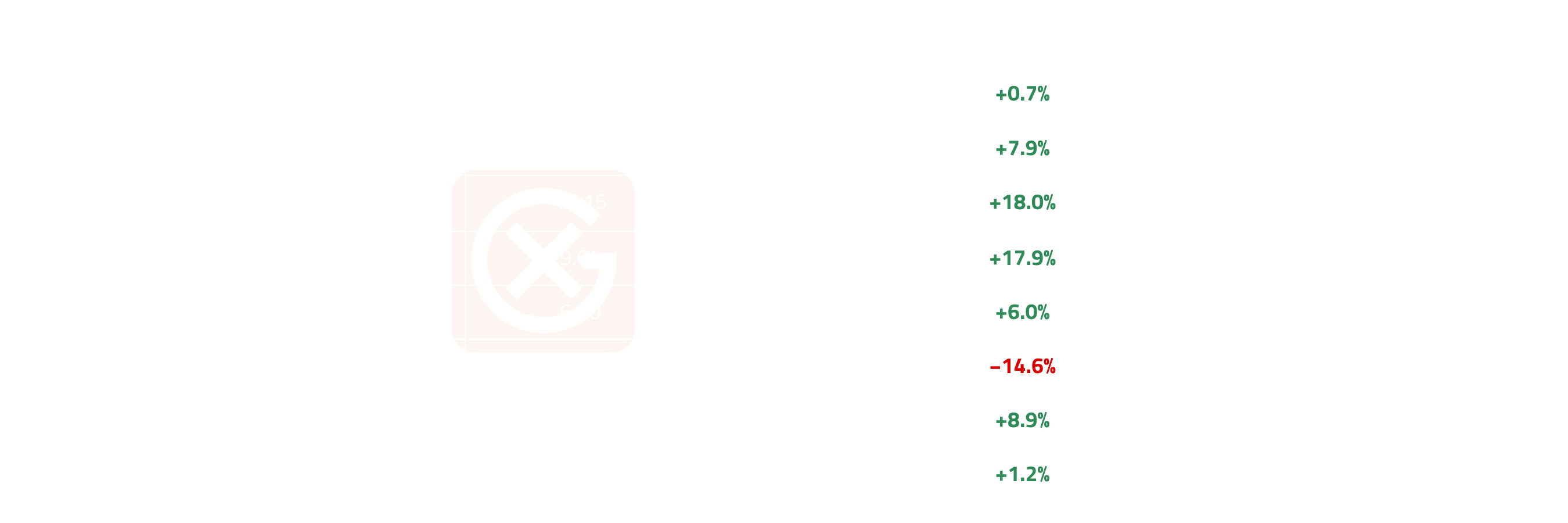
- All indices USD/mt, GX-assessed spot (current vintages). CEEU = CORSIA Eligible Emissions Units (Europe), series launched April 2026; no YoY available.
- CEEU went sixteen consecutive sessions without a lower print, from a $9.50 open (1 July, also the month low) to $13.15 (22 July), then eased to settle at $12.75 for the final three sessions; monthly average $11.37 (+17.9% MoM), +34.2% open-to-close. The 17 July EU ETS review retained the Article 12(9) unit-cancellation mechanism through 2035, converting European carrier EEU demand from a single January 2028 deadline into a rolling obligation to 2035
- Two sessions tied as the largest single-day gain at +$0.75, on 15 and 17 July, so the proposal confirmed a move already underway into a known publication date rather than initiating it
- Tech Removal and NBS Removal both printed $22.45 on all 23 sessions. NBS Removal closed the gap by rising $1.35 from its June close of $21.10, while Tech Removal held the level it had already reached by end-June, so the convergence is a nature-removal bid rather than tech weakness
- NBS Current printed $19.05 flat for all 23 sessions, +18.0% MoM and +34.9% YoY, the largest MoM gain in the set after CEEU
- NBS Avoidance moved off $6.70 for the first time since April, printing $7.10 flat for the full month; at −4.2% it is the only negative YoY in the set
- CCP Current faded intra-month for the second consecutive month, opening $6.45 and closing $5.95, exactly where it opened June; the monthly average still rose +8.9% MoM as the whole range stepped up $0.50
- BeZero AA fell in four steps ($7.80, $7.10, $6.60, $6.35, $6.20) for a −14.6% MoM decline, against a flat June
- Renewable-energy avoidance diverged from the nature-avoidance bid. Solar $0.45 (−30.8% MoM), an all-time series low set on 1 July; Renewable Energy $0.65 (−25.3%) and Wind $0.65 (−37.4%), both still above their April 2025 lows of $0.15
CROSS-MARKET DYNAMICS
- The tech-over-nature removal premium closed completely: $2.00 in July 2025, $1.35 at the June close, $0.00 for all 23 July sessions on a month-close basis. With the SBTi Corporate Net-Zero Standard V2.0 durable-removal schedule fixed from 2035, buyers building forward cover take the lower-cost durable entry point first, lifting nature removals toward the tech benchmark rather than pulling tech down
- The removal-over-avoidance premium widened on the same basis to $15.35 from $14.40, so removal strength is not simply a rising tide across the complex
- Nature avoidance lifted while renewable-energy avoidance weakened, which separates the two pools on CORSIA eligibility rather than integrity labeling: the CORSIA-eligible VCM index rose 130.5% MoM to $2.75, though it is only +1.9% YoY and the move is a recovery from a June trough of $1.19 rather than a new high
- CCP Current gained on the monthly average (+8.9%) while falling within the month for the second consecutive month, so the integrity-label premium is stepping up between months rather than being bid intra-month
- BeZero AA − A compressed to $2.22 from $3.41, the narrowest of the February to July window, as AA fell and A firmed. No July driver was identified for the AA decline and none is inferred
CROSS-REGIONAL DYNAMICS
- Both CORSIA measures rose together: CEEU (Europe) +17.9% MoM and the global CORSIA-eligible VCM index +130.5% MoM, so the July repricing is CORSIA-wide rather than an artifact of European policy alone. The two sit an order of magnitude apart ($11.37 versus $2.75) on different eligibility baskets, so the spread is not tradeable as a regional arb
- Origin-specific avoidance weakened outside Europe: Turkish Wind $0.65 (−54.3% MoM), its first full month at the level after holding $1.65 from January 2025 to May 2026 and breaking on 24 June; Indian Solar $0.45 (−25.0%); Indian Wind $0.65 (+19.2%)
- Brazilian NBS held $15.15, unchanged since April and +48.5% YoY, so the nature-based strength is concentrated in the established South American supply rather than spread across origins
PRICE VOLATILITY
- Coefficient of variation (standard deviation / mean), monthly. CEEU history begins April 2026.
- CEEU at 12.27% is the highest single reading in the window; BeZero AA returned to 7.90% from June's 0.00%. CCP (3.99%) and BeZero A (0.97%) were the only other non-zero readings
- Four of eight indices printed 0.00% CV: NBS Current, NBS Removal, NBS Avoidance and Tech Removal each held one level for all 23 sessions. All four have now been at or below 2.1% for three consecutive months
- CEEU's 12.27% is directional rather than choppy, a sixteen-session one-way climb. A CORSIA exposure hedged off the 1.67% to 2.13% CV of April and June understates the realized move by six to seven times
SOMETHING TO WATCH
- CEEU into the January 2028 cancellation deadline
- Observation: CEEU closed $12.75, +34.2% open-to-close, 3.4% below the April launch high, on a 12.27% CV.
- Why it matters: the July move priced demand duration rather than scarcity clearing; with authorized supply near 51 Mt against Phase 1 estimates centered on 200 Mt, a sustained close above the $13.20 April high would confirm the market is repricing the shortfall itself, while a fade back under $10.00 would mark the ETS proposal as a one-off repricing already absorbed.
- What to monitor: monthly count of LoA-issuing host countries and cumulative authorized Mt; ICAO Council response to the EU proposal; European Parliament and Council positions, due by end-2026 with trilogues targeted Q1 2027.
- Tech-over-nature removal premium at zero
- Observation: Tech Removal minus NBS Removal is $0.00 for the full month, from $1.35 at the June close and $2.00 a year ago on the same basis.
- Why it matters: parity removes the cost incentive to substitute nature for tech durable cover; a reopening premium signals buyers re-separating the two on permanence grounds ahead of the 2035 durability step-up, while a nature-over-tech inversion would signal nature removal supply tightening faster than engineered.
- What to monitor: the first non-$22.45 print in either index; SBTi Claims System publication, still pending; CRCF permanent-removal integration into the EU ETS.
- Durability of the new nature-avoidance level
- Observation: NBS Avoidance at $7.10 flat, first move off $6.70 since April, still −4.2% YoY.
- Why it matters: if the lift is CORSIA-driven it should track CEEU direction and hold while EEU demand builds; if it fades back to $6.70 while CEEU holds, the July print was a reassessment rather than a demand pull and the avoidance pool stays in run-off pricing.
- What to monitor: NBS Avoidance against CEEU weekly direction; CORSIA-eligible VCM index (GX0013080) for confirmation of a sustained level rather than trough recovery; retirement volumes from CORSIA-eligible avoidance projects.
EXTRAS
- CORSIA supply base: cumulative authorized supply reached 51 Mt by July, roughly half of it from a single jurisdictional REDD+ program in Guyana (AlliedOffsets); IATA's June fact sheet put volumes nearing 40 Mt. Phase 1 demand estimates span roughly 75 Mt to 235 Mt across published scenarios, with SGF-adjusted estimates near 200 Mt, so the shortfall is wide at the top of that range and still present at the bottom. Because supply is concentrated as well as scarce, a lengthening demand horizon transmits to price rather than being absorbed by issuance
- Qualification on the CORSIA read: the Commission also dropped the additional quality thresholds an earlier draft would have applied, which on that draft's terms would have excluded 84% of already-eligible Phase 1 credits; keeping them eligible leaves more supply in the pool and works against price
- Detail on the 17 July proposal: the ETS scope extension is limited to flights within 5,000 km of the EU from 2029, for four years and subject to a 2032 review, with the "stop the clock" limitation held. ICAO warned the same day that unilateral expansion would duplicate CORSIA and undermine the only global measure for international aviation
- June comparison: the month was the mirror image, when Letters of Authorization arriving ahead of a not-yet-urgent deadline drove CEEU down 14.1%
- Unattributed moves: the BeZero AA decline (−14.6% MoM) and the weakness in renewable-energy methodologies have no identified July driver and are reported as data only
Note: All figures, prices and market activity referenced in this report are based on the period 1 to 31 July 2026.
.webp)

.webp)