SUMMARY
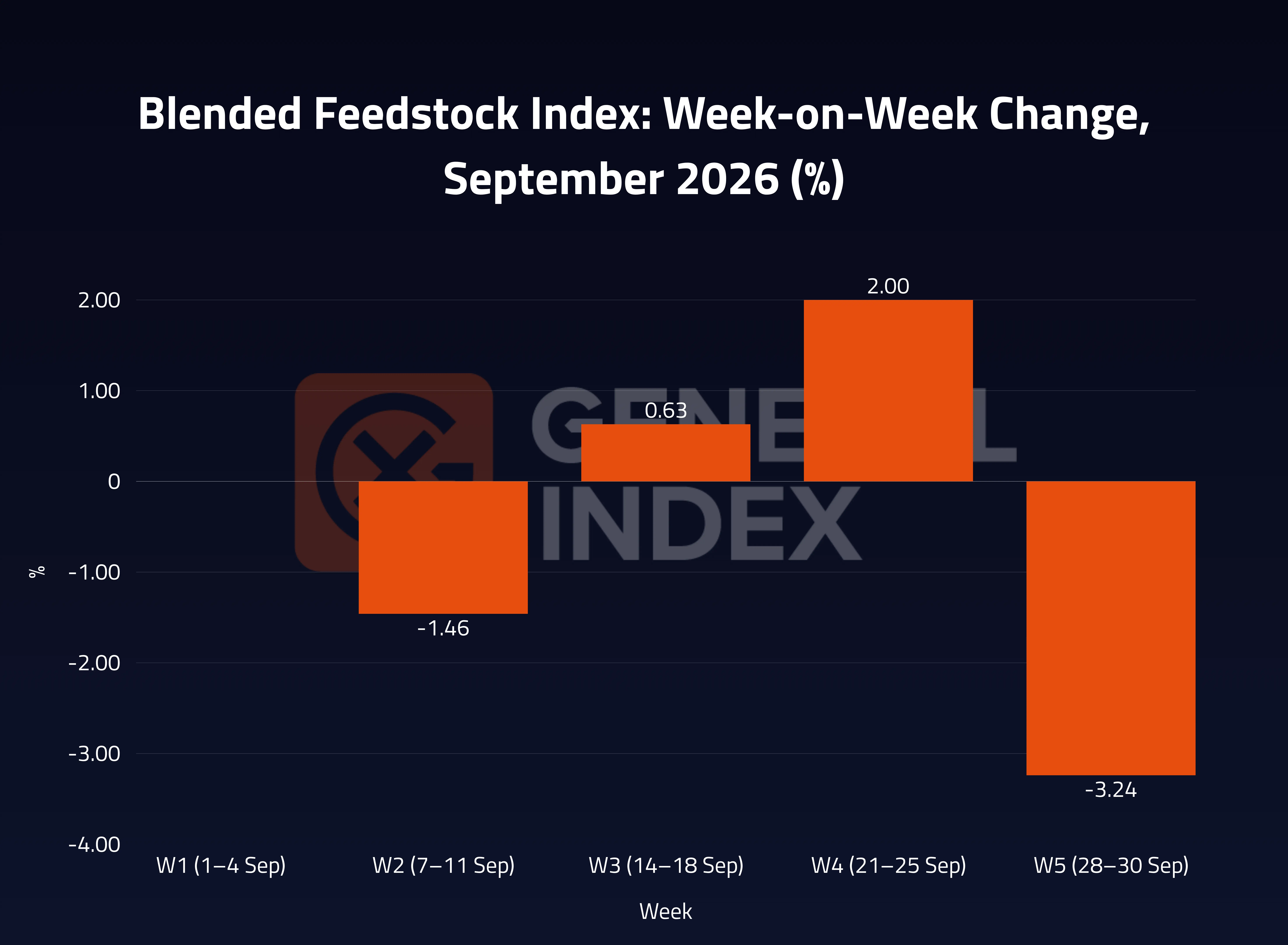
TTF day-ahead averaged €75.75/MWh in September, up 22.7% month on month and a third consecutive monthly rise, but the month split around a 14 September peak of €84.14/MWh. Renewed US-Iran fighting around the Strait of Hormuz drove the first half, with TTF and Dated Brent rising together as a shared risk premium rebuilt; from mid-month, reports of alternative shipping routes, renewed US-Iran contact and smaller-than-expected German storage tenders pulled TTF off its peak. TTF set a monthly low of €69.15/MWh on 29 September, and W4 fell 7.8% week on week, ending six consecutive weekly gains. Five sessions moved more than 5%, yet the coefficient of variation fell to 5.47% from 7.48% in August because each move reversed inside a €69 to €84 band. Qatari LNG remained under force majeure and EU storage sat well below the seasonal norm, so refill buying repeatedly met the sell-offs. PEG and ZTP moved from premiums to discounts against TTF, while CEGH's premium narrowed.
PRICE ACTION
TTF opened September at €72.04/MWh on 1 September, 9.06% above the 28 August close of €66.05/MWh, after a U.S. strike on Iranian forces on Larak Island was followed by Iranian attacks on U.S. bases in Jordan over the UK bank-holiday weekend. The rally ran through W2 as the US hit three Iranian oil tankers and the IRGC said it struck three tankers and three US-linked vessels, while attacks by Iran-allied militants in Yemen on Saudi energy facilities forced a temporary halt to some operations. TTF first settled above €80/MWh on 10 September and peaked at €84.14/MWh on 14 September. On 21 September it fell 6.75% as reports of alternative shipping routes eased Gulf supply concerns alongside lower crude, and as Germany's latest storage tenders showed lower procurement volumes than anticipated. Month-end swung in both directions: Iran's conditions at the UN, ruling out free navigation through Hormuz while sanctions and the US blockade remain, lifted TTF 4.65% on 24 September; an improving Norwegian supply schedule and a short-lived easing of Middle East risk cut it 6.06% on 25 September; Trump's weekend rejection of Iran's Hormuz proposal lifted it 2.87% on 28 September. TTF set its monthly low on 29 September and closed at €73.83/MWh on 30 September.
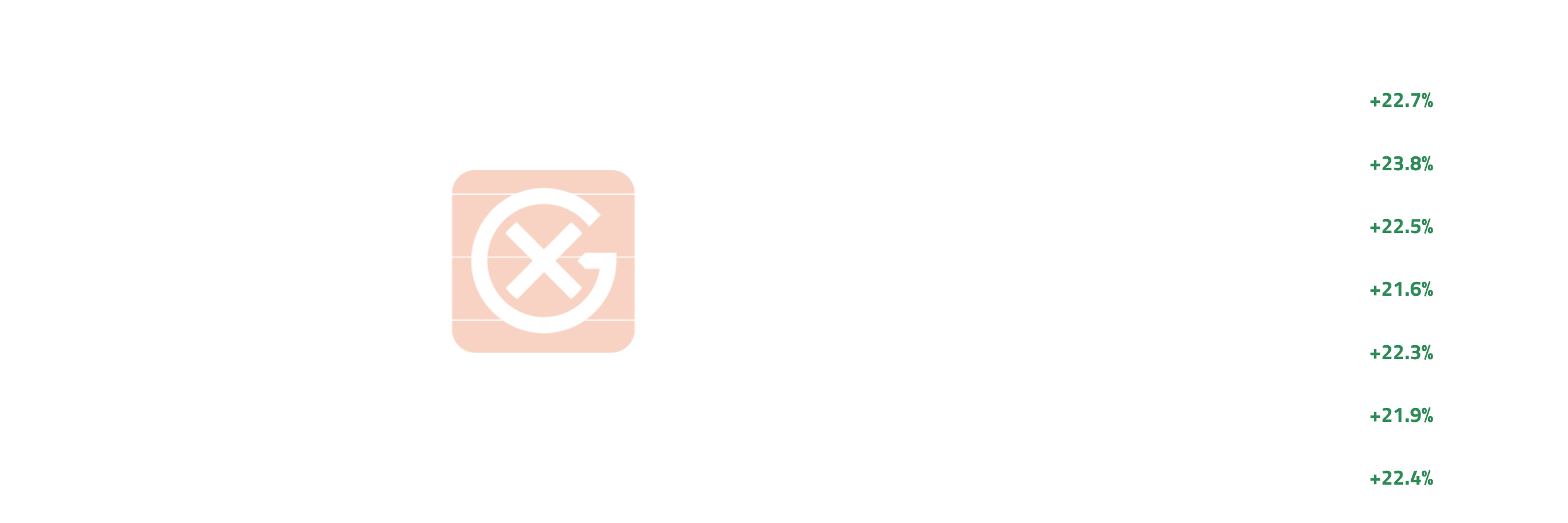
- TTF averaged €75.75/MWh, up 22.7% from August's €61.71/MWh; every hub in this report rose 21.6% to 23.8%, with NBP the strongest and PEG the weakest.
- The monthly range was €14.99/MWh (€69.15 to €84.14), narrower than August's €15.70/MWh; TTF gained €12.10/MWh from 1 to 14 September, then closed €10.31/MWh (12.2%) below the peak.
- W4's 7.8% decline was the first weekly fall since the first week of August, ending six consecutive weekly gains.
- Five sessions moved more than 5%: +9.06% (1 Sep), −6.75% (21 Sep), −6.06% (25 Sep), −6.07% (29 Sep) and +6.77% (30 Sep). Four of the five fell in the final eight sessions.
CROSS-MARKET DYNAMICS
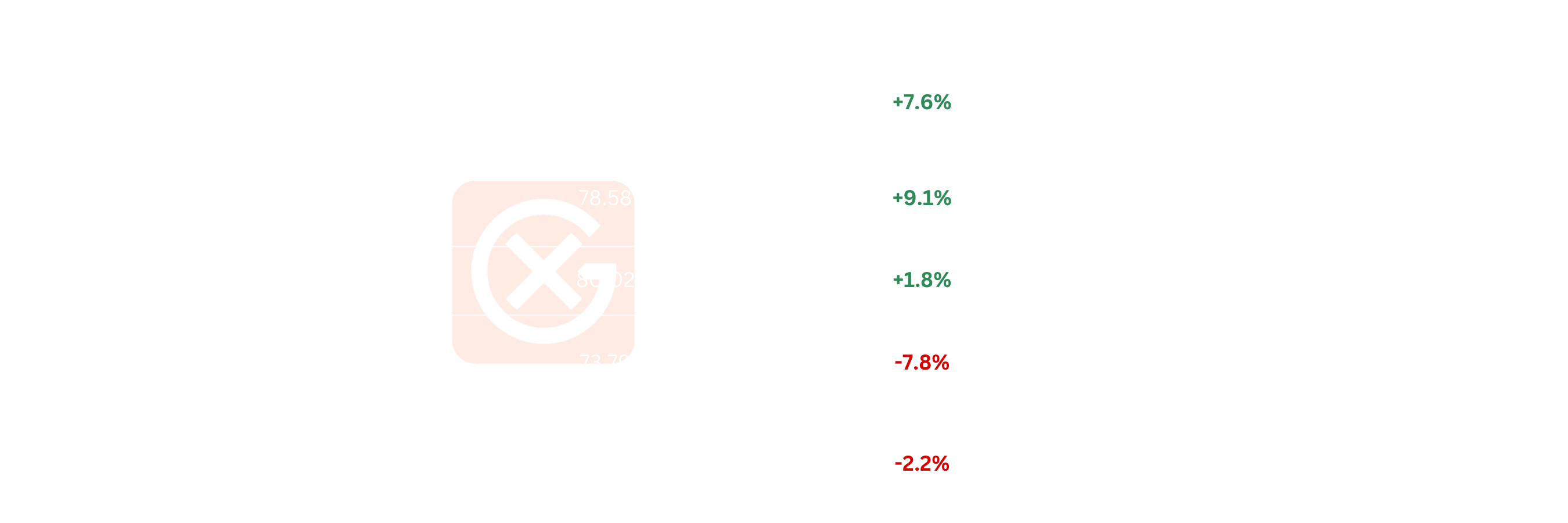
- Oil and gas re-coupled after August's divergence. Dated Brent averaged $116.80/bbl, up 28.4% from $90.94/bbl, and the correlation of daily TTF and Brent moves rose to 0.67 from 0.56.
- From 1 to 14 September Brent gained $36.54/bbl (+38.8%) against TTF's €12.10/MWh (+16.8%).
- Both peaked within one session (TTF on 14 Sep, Brent at $131.77/bbl on 15 Sep) and both fell back into month-end: TTF 12.2% and Brent 8.8% from peak to close.
- The renewed fighting priced a shared Hormuz risk premium into both commodities, reversing August's divergence.
- Asian competition for LNG eased. Deliveries to the EU and UK recovered to 4% below year-ago levels on a 30-day average, from 30% below in early August, while flows to Northeast Asia fell (Bloomberg). JKM fell 2.14% to $25.82/MMBtu in late-September trade, narrowing the Asian premium and favoring Atlantic cargoes into Europe.
- Qatari supply remained the binding constraint. Qatar extended force majeure on LNG shipments to Asia and Europe by another month, and on deliveries to Italy's Edison through early December, keeping a floor under the headline-driven sell-offs.
CROSS-REGIONAL DYNAMICS
- PEG moved from a +€0.27/MWh average premium to TTF in August to a −€0.36/MWh average discount in September, widening to −€1.35/MWh by 30 September, the largest discount of any continental hub at month-end.
- ZTP also moved to a discount, from +€0.11/MWh on 1 September to −€0.21/MWh on 30 September, averaging −€0.07/MWh against +€0.16/MWh in August.
- CEGH held the widest premium in the report but narrowed from +€1.63/MWh to +€1.18/MWh, swinging between +€1.80/MWh (7 Sep) and +€0.31/MWh (10 Sep).
- THE premium narrowed from +€0.46/MWh to +€0.05/MWh.
- ETF (Denmark) was the most volatile basis in September, with the widest intramonth swing in the report (+€0.03/MWh to −€2.11/MWh on 22 September); its average discount widened to −€0.99/MWh from −€0.61/MWh.
- NBP's discount to TTF in EUR/MWh terms averaged −€1.30/MWh against −€1.44/MWh in August, with an intramonth widest of −€2.71/MWh on 16 September.
- Hub-level detail for the month is set out below.
PRICE VOLATILITY
Day-ahead CV fell at every hub for a second month, to a 5.02% to 5.67% range. Six hubs posted their lowest reading since May; NBP's 5.36% was its lowest of the six months shown. PEG was the most volatile hub (5.67%) and CEGH the least (5.02%). The low CV sits alongside five sessions that moved more than 5%: CV measures dispersion around the monthly average, and September's swings kept reversing within a €69 to €84 band rather than trending. Day-to-day risk rose even as monthly dispersion fell, with the standard deviation of daily TTF changes at 4.11% in September against 3.75% in August, excluding the 1 September gap. Position sizing calibrated to monthly CV understates single-session exposure in this regime.
CV (%) of day-ahead index, sample standard deviation over the monthly mean.
SOMETHING TO WATCH
- US-Iran Hormuz Negotiations
- Observation: Iran said it would not soften its conditions for reopening Hormuz after Trump rejected its latest proposal, although Trump indicated negotiations could resume; on 30 September Trump denied reports that Washington might ease sanctions on Iran.
- Why it matters: TTF's largest single-session gain (+9.06% on 1 September) and the rises on 24 and 28 September all followed US-Iran developments. A reopening agreement is the main route back to Qatari LNG flows, and with oil and gas re-coupled, de-escalation would pull both lower together.
- What to monitor: Whether talks resume in early October, the status of Qatar's force majeure, and daily Hormuz tanker transits.
- Storage Into the Heating Season
- Observation: EU gas storage was just over 71% full on 28 September, with Germany below 58%, against a five-year seasonal average of 87%.
- Why it matters: The shortfall keeps prompt refill demand under prices, which is why headline-driven falls kept reversing. German procurement volumes are now a direct price signal: lower-than-expected tender volumes contributed to the 6.75% fall on 21 September.
- What to monitor: Weekly GIE AGSI+ updates, Trading Hub Europe tender results for Q1 2027 supply, and the return of Norwegian flows from maintenance (bookings fell to 262.5 mcm/day during the week of 21 September).
- Oil-Gas Re-Coupling
- Observation: The correlation of daily TTF and Dated Brent moves rose to 0.67 in September from 0.56 in August, and both benchmarks peaked within one session of each other.
- Why it matters: A shared Hormuz premium means escalation and de-escalation now move gas and oil together, while gas keeps a separate floor from storage and Qatari supply that oil does not have.
- What to monitor: Same-day direction of TTF and Dated Brent on US-Iran headlines, the JKM premium over TTF, and European LNG arrivals against year-ago levels.
Note: All figures, prices and market activity referenced in this report are based on the period 1 to 30 September 2026.
.webp)