The lunch and the poll
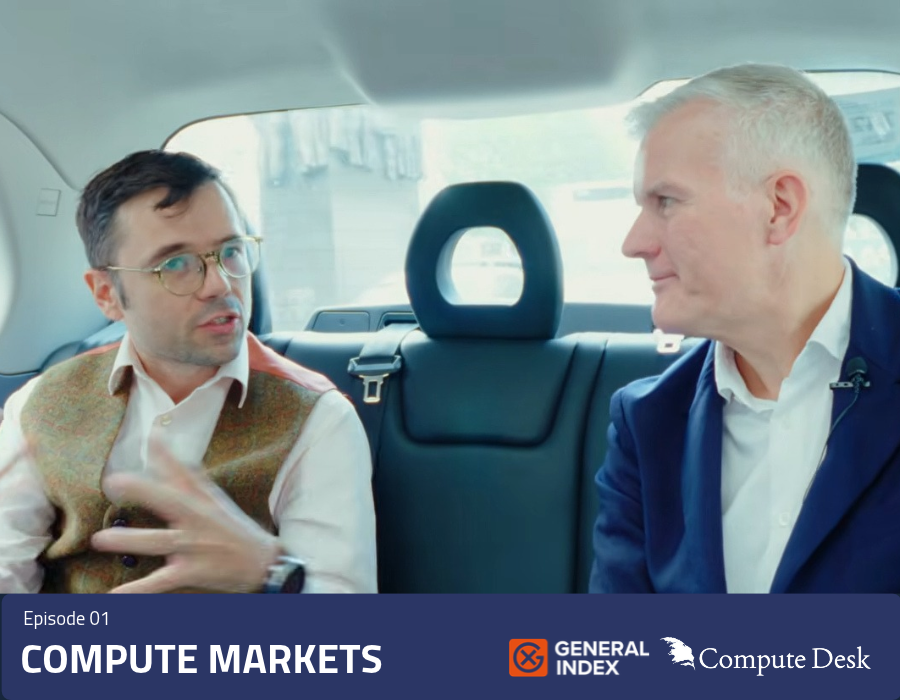
On 18 November 2026, General Index hosted the first Ahead of the Curve lunch at Lucky Cat in London. The theme was data strategy in the age of AI, and the guests were market data leaders from energy trading firms and hedge funds.
At the end of the session, 14 guests completed a short anonymous poll on how their teams use AI with market data. Six identified with energy, five with finance, and three with both. With 14 respondents, the results are indicative rather than representative of the wider market. They do give a clear view of where AI adoption stands among the people who manage market data.
The headline is that AI is already part of the workflow for every team that answered. The main constraint is not technology or skills. It is whether data licenses allow AI use.
AI is already in use across every team that answered
All 12 respondents who answered the question already use AI with market data in some form. None selected "not using AI yet."
The most common setup is an in-house model. Nine of the 12 (75%) run their own LLM on internal data stores. Four (33%) use AI agents on external terminals, and four connect to data providers through MCP (Model Context Protocol).
Skills were not a concern. Not one of the 14 respondents named skills as a blocker. Teams have the capability to build. What they need is market data that is licensed, structured and documented for use inside their own models.
Where AI adds value today
Data cleaning and QA was the most cited area where AI is adding value, named by 8 of 14 respondents. Automated reporting followed with 7.
The pattern is clear: AI is doing the most work in data operations, preparing, checking and reporting on data. Trading and risk signals ranked fifth. Six respondents also said AI helps them find data they did not know they had.
Licensing is the main blocker
Licensing rights for AI use was the most cited blocker, named by 8 of 14 respondents. That is ahead of data quality and lineage (5), cost (5) and governance or model risk (4).
The license picture explains why. Of the 13 respondents who answered, 8 said only some of their data licenses allow use in AI or LLM tools. One ticked both some and most, one said most, and one said all. Two wrote in that they were not sure. In practice, only 1 of 13 has every license cleared for AI use, and two teams do not know where they stand.
Finance and energy see different blockers
Finance respondents pointed mainly to licensing. Energy respondents cited cost and governance most often. The groups are small, so read the split as indicative.
Trust in AI analysis sits at the midpoint
Asked whether they would trust AI-generated market analysis to inform a trading decision, respondents gave an average score of 2.85 out of 5. Seven of the 13 who answered chose 3. Four chose 2 and two chose 4. No one chose either extreme.
The result reads as caution rather than rejection. It also lines up with the value findings: AI is trusted to prepare and check data, and less so to drive a trading decision.
Data quality and lineage was named as a blocker by 5 of 14 respondents. Confidence in an AI output depends on confidence in its inputs, including where a price comes from and how it is calculated. One guest summed it up: "Concentrate on data quality rather than features."
Budgets are moving toward AI
Eight of the 12 respondents who answered (67%) expect 10% or more of their market data budget to go on AI in the next 12 months. Seven expect 10% to 25%, and one ticked both 10% to 25% and more than 25%. Three expect less than 10%, and one wrote in that AI has a separate budget.
No one selected "none." AI spend is now a planned line in market data budgets, which raises the stakes on the licensing question above.
What guests want from data providers
We asked one open question: what is one thing data providers should do differently? Twelve guests answered, and their responses fell into three themes. Some answers cover more than one theme.
1. Simpler licensing and fairer commercial terms (6 of 12 answers)
- "Allow usage and training rights." (Finance)
- "Refrain from very restrictive clauses. Pricing transparency." (Finance)
- "Provide & sell the services we need & want. No bundling." (Energy)
2. Clarity on what is offered and how data is used (4 of 12 answers)
- "Be clear about what they have to offer and not just a generalised term." (Energy)
- "Broader understanding of how the data is actually used, which should translate into a more sensible commercial discussion." (Finance)
- "Work together and understand value proposition." (Energy)
3. Data quality and structure over features (3 of 12 answers)
- "Concentrate on data quality rather than features." (Energy)
- "Centralize the data layers." (Energy)
- "Provide detailed analysis of data attributes." (Finance)
How GX approaches these issues
Licensing, access, data quality and clarity are central to how GX data is built and licensed.
- Licensing. GX offers predictable, fair pricing with unlimited internal use, and flexibility for derivative datasets.
- AI access. The GX MCP server connects Claude, ChatGPT, Microsoft Copilot and other MCP-compatible clients directly to GX pricing data. It is included with a GX subscription. GX data is also available through the API, GX Go, Excel, and partners including Bloomberg, LSEG, ICE, FactSet, Snowflake, Enverus and Zema Global.
- Data quality and lineage. GX benchmarks are transparent, data-led and FCA-regulated. They are built from more than 400,000 trades a month using tested algorithms and expert market sign-off, under a published methodology.
- Clarity on what is offered. GX prices can be explored for free in GX Go, so teams can see the coverage before a commercial conversation starts.
About the poll and the series
Fourteen paper cards were completed at the Ahead of the Curve lunch on 18 November 2026. Responses are anonymous and shared only in aggregate. Where respondents ticked more options than requested, every tick is counted. Some cards left questions blank, so the number of answers is given for each question.
Ahead of the Curve is a lunch series for data leaders in commodities. To join a future lunch, get in touch.