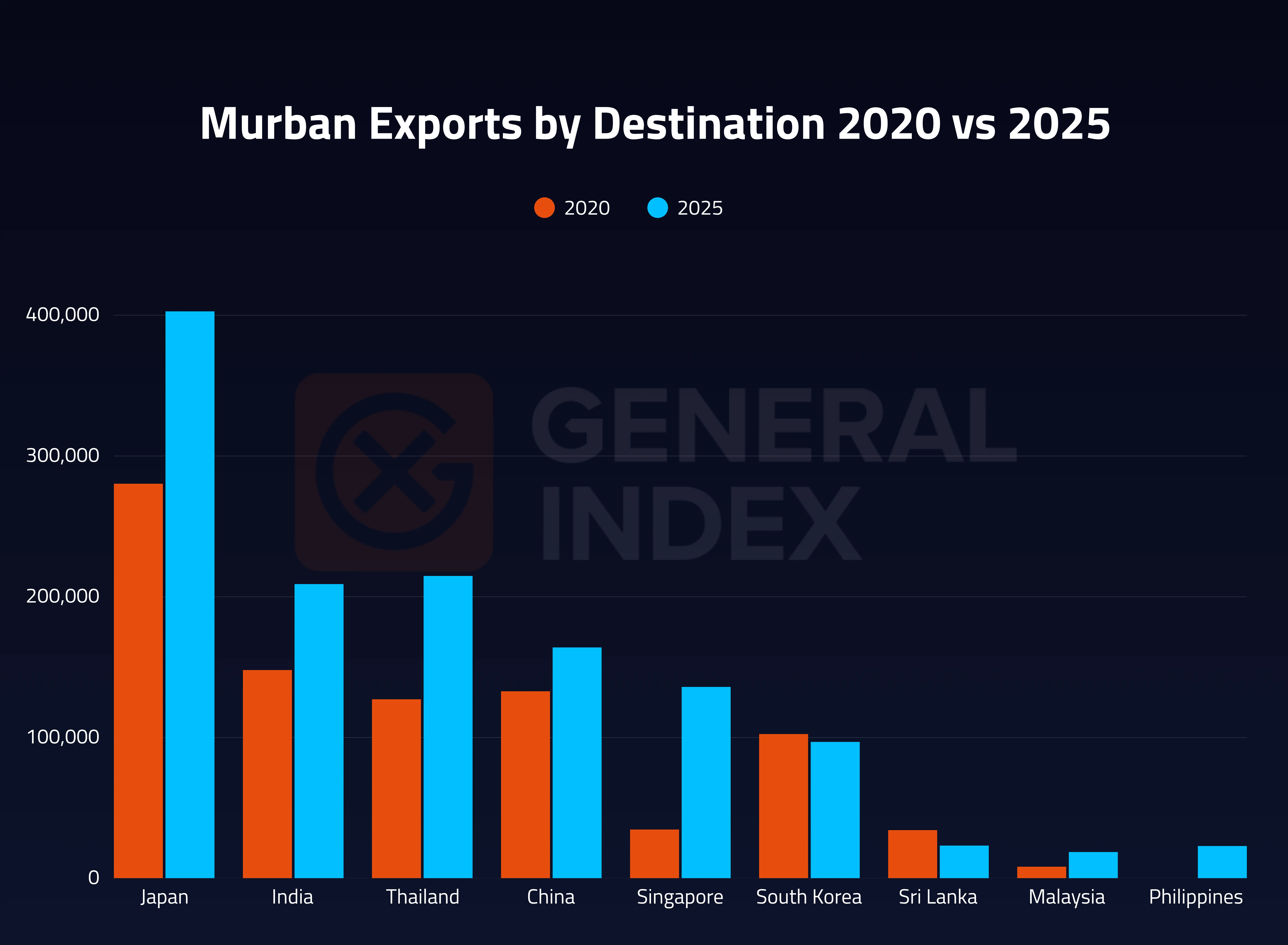
Dubai crude’s physical differential has fallen to its lowest level in almost six-years, amid muted demand which has resulted in an overhang of prompt medium sour barrels.
The physical premium or the M1/M3 Dubai spread, sunk to -US$0.540/b on 6th January at Singapore close, marking the lowest level since May 2020 when the Covid virus had started to break out globally. It’s also the first time since December 2023 that the spread has flipped into a negative territory or contango – a price structure where prompt prices fall below prices for forward months, indicating weak prompt fundamentals.
The main reason for the weakness in the Dubai physical premium can be attributed to the inability by Anglo-Swiss trading firm Glencore to place a string of February-loading barrels it had purchased in December, taking 31 out of the 33 February-loading medium sour barrels bought through the Dubai partials mechanism last month. With each cargo carrying 500,000 bl of crude, Glencore has to place around 550,000 b/d of crude in February. Out of the 31 cargoes purchased, 87% were made up of Abu Dhabi’s medium sour Upper Zakum crude. But the company was heard to have struggled to place at least 8-10 of the Upper Zakum cargoes it had purchased last month, creating an overhang which pushed Upper Zakum values to discounts of around US$0.30/bl to Dubai.
Upper Zakum is the most liquid medium sour grade deliverable into the Dubai basket, and an overhang in the grade has an immediate impact on the Dubai physical differentials, forcing prompt values lower.
Glencore may have been betting on increased geopolitical tension between US and Venezuela adding a risk premium to prices, but also on the fact that Chinese state-controlled companies would continue their purchases to fill the country’s Strategic Petroleum Reserve (SPR) with available barrels from the Middle East, if flows from Venezuelan were to stop. But market sources suggest that Chinese firms have eased up on SPR purchases, taking away the main short-term support from the market, which is otherwise oversupplied. Meanwhile, continued peace talks between Ukraine and Russia have continued to have a bearish influence on oil prices.
Glencore was heard to have placed most of its remaining cargoes after selling 2mn bl of Upper Zakum to PetroChina on 7 January, market sources said. This may result in a recovery in Dubai physical differentials in the coming days.
%20(1).webp)

.webp)
.png)
.webp)